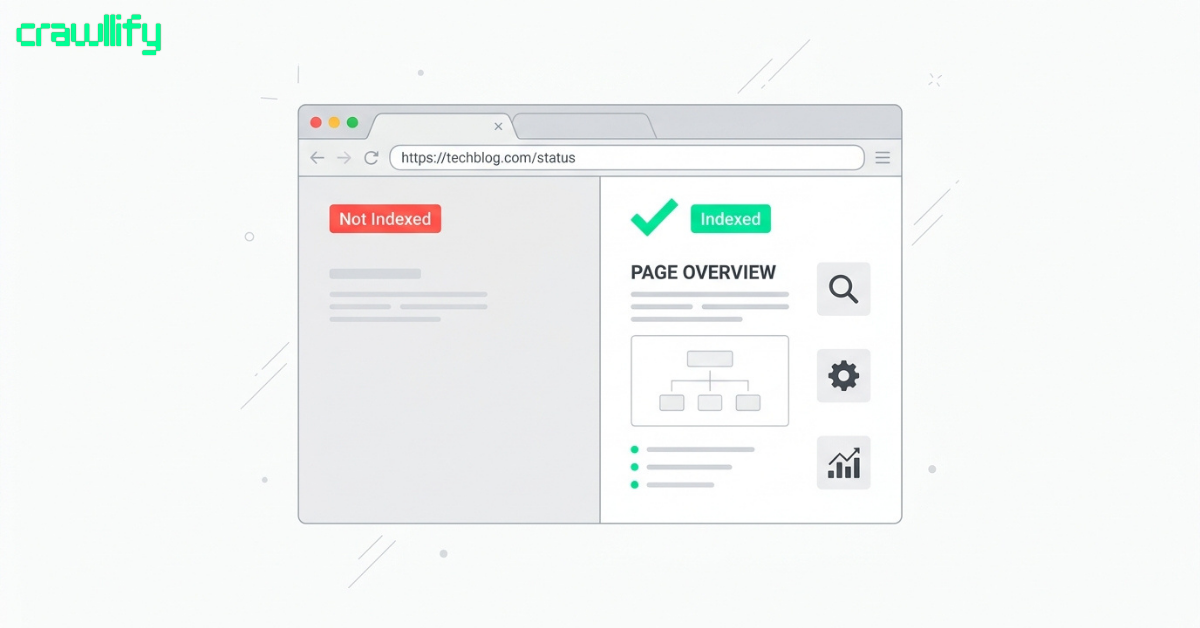
You built something real. After all that work on Lovable, Bolt or Replit, you shared the link and waited. And then — nothing. No traffic, no Google impressions, no sign that your site even exists.
Here’s the hard truth: Google genuinely cannot see your site. In fact, neither can ChatGPT, Perplexity, Bing, nor any AI search engine crawling the web today. Because of one specific technical problem that affects every React-based site on a vibe coding platform, your pages are completely invisible — and it has nothing to do with the quality of your product.
The good news, however, is that the fix is clean, fast and requires zero code changes. This post explains exactly what’s happening and how to solve it in under 10 minutes.
What Google Actually Sees When It Visits Your Site
When a real visitor opens your Lovable or Bolt site in a browser, here’s what happens: the browser downloads a nearly empty HTML file, runs your JavaScript, and consequently the JavaScript builds the full page — your hero section, your features, your pricing, everything.
For a human, that process takes a fraction of a second. As a result, they see the full site and never notice a thing.
However, Google’s crawler doesn’t work like a human browser. When Googlebot visits your site, it downloads that same HTML file and finds an almost completely empty document. Your entire site — every heading, every paragraph, every product description — sits inside a single blank container, waiting for JavaScript to fill it in. Because Googlebot can’t wait for that to happen, it moves on with nothing to index. Your site, therefore, effectively does not exist in Google’s eyes.
Importantly, the same is true for Bing, ChatGPT, Perplexity, Gemini, and every other AI search engine that crawls the web.
Why Lovable, Bolt and Replit Don’t Solve This For You
Lovable, Bolt and Replit are remarkable tools for building fast. They handle hosting, deployment, and making your app work perfectly for real users. However, none of them handle search engine visibility — and that’s not a knock on them. It’s simply outside their scope. Because vibe coders aren’t writing raw HTML or configuring servers, this gap goes completely unnoticed until you start wondering why Google has never visited your site.
To check whether your site is indexed right now, open Google and search: site:yourdomain.com
If no results appear, Google has not indexed a single page. If only the homepage shows up, all your inner pages remain invisible. In practice, this is the most common result for Lovable, Bolt and Replit sites — and most founders discover it months after launch.
The Root Cause: Client-Side Rendering
The technical term for what your site does is client-side rendering, or CSR. In other words, the entire app renders inside the user’s browser using JavaScript. While this approach delivers a great user experience — fast navigation, smooth transitions, an app-like feel — search engine crawlers and AI bots were built to read HTML directly.
Specifically, they expect to download a page and find the content already written in plain HTML, ready to read and index. Client-side rendered sites fail this expectation completely, because the content doesn’t exist in the HTML at all. It only appears after JavaScript runs in a browser. Most crawlers either don’t run JavaScript, or run a limited version that doesn’t wait long enough for your full page to load.
Which Crawlers Are Affected?
In short, every major search engine and AI platform runs into this problem:
- Googlebot — partially renders JavaScript but frequently misses content or delays indexing by weeks
- Bingbot — has very limited JavaScript rendering support
- ChatGPT / OpenAI crawler — reads raw HTML only
- Perplexity crawler — reads raw HTML only
- Claude / Anthropic crawler — reads raw HTML only
- Gemini / Google AI — relies entirely on Googlebot’s already-indexed data
- Twitter, LinkedIn and Slack bots — read raw HTML to generate link previews
The combined result is that your site stays invisible to most of the sources that drive organic traffic in 2026.
The Fix: Prerendering
The solution is called prerendering. Rather than sending crawlers your empty HTML shell, you intercept their request and serve them a fully rendered HTML version of the page — with all your content already in place, readable and indexable. Meanwhile, real visitors still get your normal React app. They experience no change whatsoever, because the prerendering happens silently in the background, exclusively for bots.
This is, in fact, how every major website — from e-commerce stores to SaaS platforms — solves the React SEO problem. Moreover, it’s exactly what Crawllify does for vibe-coded sites, without requiring any changes to your existing project.
How Crawllify Works
Crawllify works by adding a lightweight edge function to your site. Here’s what happens each time a bot visits:
- A bot — such as Googlebot, the Perplexity crawler or the ChatGPT crawler — visits your domain
- The edge function silently checks the visitor’s user agent — the system currently identifies 43+ known crawlers
- For bots, Crawllify renders the full HTML using a headless browser and serves it immediately
- As a result, the bot receives a complete, content-rich HTML page it can index right away
- Human visitors bypass this entirely and get your normal React app — completely unaffected
Because setup requires only pasting one prompt into your Lovable chat and clicking Publish, most customers go live in under 5 minutes — with no code changes and no rebuild.
Why This Matters More Than Ever in 2026
Google traffic has always mattered. In 2026, however, AI search engines are becoming an equally significant traffic source — and they are even more dependent on readable HTML than traditional search engines are.
For example, when someone asks ChatGPT, Perplexity or Gemini a question, those tools crawl the web and cite the sources they find. If your site has no indexable HTML, it will never appear as a citation. Consequently, you will never show up in an AI-generated answer — which means you’re invisible to the fastest-growing discovery channel on the internet.
Founders who fix this now, therefore, will have a compounding advantage over competitors who discover the problem months or years later.
How to Fix Your Vibe-Coded Site’s SEO — Step by Step
Step 1 — Check whether your site is currently indexed
Search site:yourdomain.com on Google. If you see fewer pages than your site actually has, your indexing is broken and this fix applies directly to you.
Step 2 — Sign up for Crawllify
Sign up at crawllify.com and pick the plan that suits your needs. Plans start at $9/month with no lock-in.
Step 3 — Add your domain
Inside your Crawllify dashboard, add your domain and select your platform (Lovable, Netlify, or Vercel). The dashboard generates a personalised install prompt with your API key already included — no configuration needed on your part.
Step 4 — Install the edge function
Copy the install prompt from your Crawllify dashboard and paste it directly into your site’s Lovable chat. Lovable creates the required files automatically. Click Publish and your site redeploys in about two minutes. No DNS changes, no server access, no code to write.
Step 5 — Verify your install and submit your sitemap
Once your site finishes redeploying, click Verify Install in your Crawllify dashboard. The system pings your site as a bot and confirms the edge function is active. From there, submit your sitemap to Google Search Console. On Builder plan and above, Crawllify auto-generates your sitemap so you don’t have to build one manually.
Step 6 — Watch the indexing begin
Within 24 to 72 hours, Googlebot will start finding and indexing your pages. Within a week, your site will typically begin appearing in Google search results for the first time.
Frequently Asked Questions
Will this break my existing site?
No — your site stays exactly the same for real visitors. Because Crawllify only changes what bots see, human users experience no difference at all.
Does Google already render JavaScript? Why do I still need prerendering?
Google does have some JavaScript rendering capability; however, it’s slow, inconsistent and incomplete. Googlebot crawls HTML first, and JavaScript rendering happens in a second wave — sometimes days or weeks later. For React single-page apps with no server-side rendering, many pages are never fully indexed. Prerendering removes that uncertainty by ensuring bots always receive ready-to-index HTML on their very first visit.
Does this work with a custom domain on Lovable, Bolt or Replit?
Yes. Crawllify works with any site deployed on Lovable, Bolt, Netlify or Vercel. Setup takes just a few minutes — no DNS changes, no server access, and no rebuilding your project required.
How long before I see results in Google?
Most customers see Googlebot crawling their pages within 24 to 72 hours of setup. Pages typically appear in Google search results within 3 to 7 days. While ranking for competitive keywords takes longer, getting indexed is the first and most critical step — and Crawllify handles that immediately.
The Bottom Line
If you built on Lovable, Bolt, Replit or any other React-based vibe coding platform, there’s a very high chance Google cannot see your site right now. Not because of anything you did wrong — but because client-side React simply wasn’t built with crawlers in mind.
Fortunately, prerendering is the standard, proven fix. It requires no code changes, no rebuild and no migration to a new platform. One paste into Lovable is all it takes, and Crawllify handles everything after that — making your site readable by Google, Bing, ChatGPT, Perplexity and every AI search engine crawling the web today.
Your site deserves to be found. Fix it today.