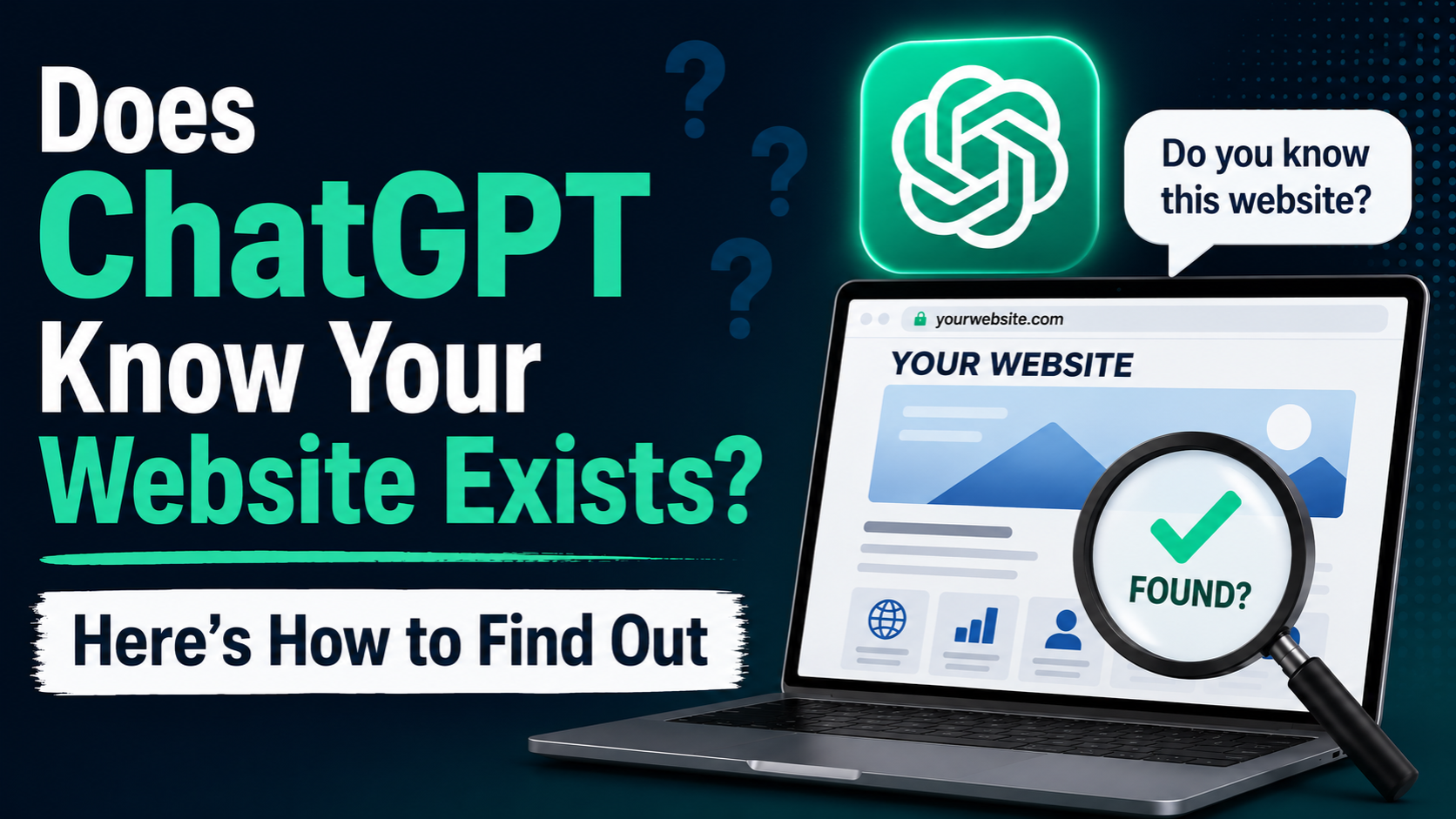
ChatGPT has 200 million weekly active users. If your website isn’t visible to ChatGPT’s crawler, you’re missing out on a massive source of potential traffic and discovery that didn’t exist three years ago.
But here’s the thing most founders don’t realize: ChatGPT, Perplexity, Claude and Gemini can’t see your vibe-coded React site any more than Google can. The same problem that makes your site invisible to search engines also makes it invisible to AI.
In this guide, we’ll show you exactly how to check whether ChatGPT knows your site exists, why it matters, and what you need to do to become visible to AI search engines.
Why ChatGPT Visibility Matters (And Why Most Founders Ignore It)
A year ago, this question didn’t matter. AI search engines were novelties. Now they’re real traffic sources.
Here’s the difference between Google and ChatGPT from a discovery perspective:
Google traffic is direct. You rank for a keyword, someone searches it, they land on your page. Conversion is yours to optimize.
ChatGPT and AI search traffic is different. You don’t rank for keywords. Instead, ChatGPT’s training data includes your website, and when someone asks ChatGPT a question your site answers, ChatGPT might recommend you or cite you as a source.
Think of it this way: Perplexity’s entire value proposition is that it reads websites and synthesises their information into an answer. If your site isn’t in Perplexity’s index, you’re invisible every time someone asks a question your content answers.
For vibe-coded sites, this is a silent problem. Your site might be generating tons of Google traffic while remaining completely invisible to every major AI search engine simultaneously.
The Same Problem: Vibe-Coded Sites Are Invisible to AI Too
ChatGPT has a crawler called GPTBot. Perplexity has PerplexityBot. Claude has Claude-Web. Every major AI search engine has a crawler that visits websites and reads them to build training data and knowledge bases.
Just like Googlebot, these crawlers face the same fundamental problem with vibe-coded React apps: they download the raw HTML and find an empty page. All your content only exists after JavaScript runs in a browser. The crawler never sees it.
This affects sites built on Lovable, Bolt, Replit and any other platform that produces client-side React apps.
The result: ChatGPT, Perplexity, Claude and Gemini have no idea your site exists. When someone asks ChatGPT a question your site answers, ChatGPT won’t recommend you because ChatGPT has never read your content.
How to Check If ChatGPT Knows Your Site
Unlike Google, there’s no public search console for ChatGPT, Perplexity or Claude. You can’t run a simple search and see indexing status.
However, there are a few ways to get a sense of whether AI crawlers have seen your site:
Method 1: Search Your Site Directly in ChatGPT
Open ChatGPT, enable web search, and search for your brand name or your domain. Does ChatGPT surface your content? Can it cite your site by name or URL?
If yes: ChatGPT knows about you.
If no, or if ChatGPT mentions your competitors but not you: your site is probably not in ChatGPT’s training data or knowledge base.
Method 2: Check for GPTBot in Your Server Logs
GPTBot identifies itself in the User-Agent header when it visits your site. If you have access to your server logs (most hosting providers provide this), search for GPTBot requests.
If you find GPTBot requests: the crawler has visited your site.
If you find zero GPTBot requests: GPTBot hasn’t crawled you yet — usually because the HTML was empty when it arrived.
Method 3: Use Perplexity’s Direct Search
Ask Perplexity directly: ‘What does yourbrand.com do?’ or ‘Tell me about yoursite.com’. Perplexity will either cite your site or it won’t.
Similar test to ChatGPT — can Perplexity find and cite your content?
Method 4: Ask Claude
Same test. Search for your site or your brand in Claude and see if Claude has any knowledge of it. If Claude has read your site, it will cite it or reference specific details from it.
What You’ll Likely Discover
If your site is built on Lovable, Bolt or Replit, here’s what you’ll find:
- ChatGPT has zero knowledge of your site
- Perplexity can’t cite you even if your content is directly relevant
- Claude hasn’t read your site
- Gemini’s knowledge of you is spotty at best
Meanwhile, your competitors who either built with SSR frameworks or implemented prerendering are showing up constantly in AI responses.
The gap is real. And it’s costing you discovery every single day.
Why AI Search Visibility Matters More Than Google Right Now
This might sound like heresy, but hear it out:
AI search is still in the early stages of adoption. Only power users are using ChatGPT search, Perplexity and Claude as their primary search tools. Meanwhile, billions of Google searches happen every day.
So why prioritise AI visibility at all?
Because AI search is growing exponentially and the founders who get indexed now will have a massive advantage when AI search becomes mainstream in 2027 and 2028.
Getting visible to ChatGPT and Perplexity now takes minutes if you implement prerendering. Waiting until AI search is mainstream to address this means you’ll have years of missed opportunities.
Early movers in AI search visibility are already seeing real traffic from ChatGPT and Perplexity recommendations. The gap between visible and invisible sites will only widen.
How to Become Visible to All AI Search Engines
The good news: the fix is the same as the Google fix. Prerendering makes your site visible to every major AI crawler simultaneously.
When GPTBot visits your site, it gets fully rendered HTML with all your content. Same for PerplexityBot, Claude-Web and Gemini’s crawler. One solution handles all of them.
Setup takes under 5 minutes. No code changes to your Lovable, Bolt or Replit project.
Frequently Asked Questions
Do I need to fix Google first or AI search first?
Fix both at the same time. Prerendering works for all crawlers simultaneously, so you’re not choosing between them. The same setup that makes you visible to Google makes you visible to ChatGPT, Perplexity and Claude all at once.
Does my site need to opt in to AI crawlers?
No. By default, GPTBot, PerplexityBot and Claude-Web respect robots.txt rules, but they crawl your site automatically if you don’t block them. You don’t need to submit your site anywhere. The crawlers find you if your content is visible.
If ChatGPT recommends my competitor, does that mean ChatGPT knows them but not me?
Not necessarily. ChatGPT’s knowledge comes from both live web crawling and its training data, which has a knowledge cutoff. If your site is brand new, ChatGPT might not know about it yet. But if your site has been live for months and ChatGPT never mentions you while mentioning competitors, it’s likely a visibility problem.
Will fixing AI visibility hurt my rankings on Google?
No. Google crawlers work exactly the same way as GPTBot and PerplexityBot. A solution that works for one works for all. Prerendering has zero negative impact on Google rankings. In fact, it typically improves them.
The Bottom Line
ChatGPT, Perplexity, Claude and Gemini represent a new distribution channel for your content. Right now, if your site is built on Lovable, Bolt or Replit, you’re completely shut out of that channel.
The fix is fast, affordable and works for Google at the same time.
Run the tests above. See what ChatGPT, Perplexity and Claude actually know about you. Then decide if the gap is worth fixing.
Spoiler: for most vibe coders, it will be.
Make Your Site Visible to ChatGPT, Perplexity, Claude, Gemini and Google — All at Once
Covers Google, Bing, ChatGPT, Perplexity, Claude, Gemini and 43+ other bots. Setup in under 5 minutes.
→ Get started at crawllify.com